
Lead Designer
A Singular Focal Point in Light
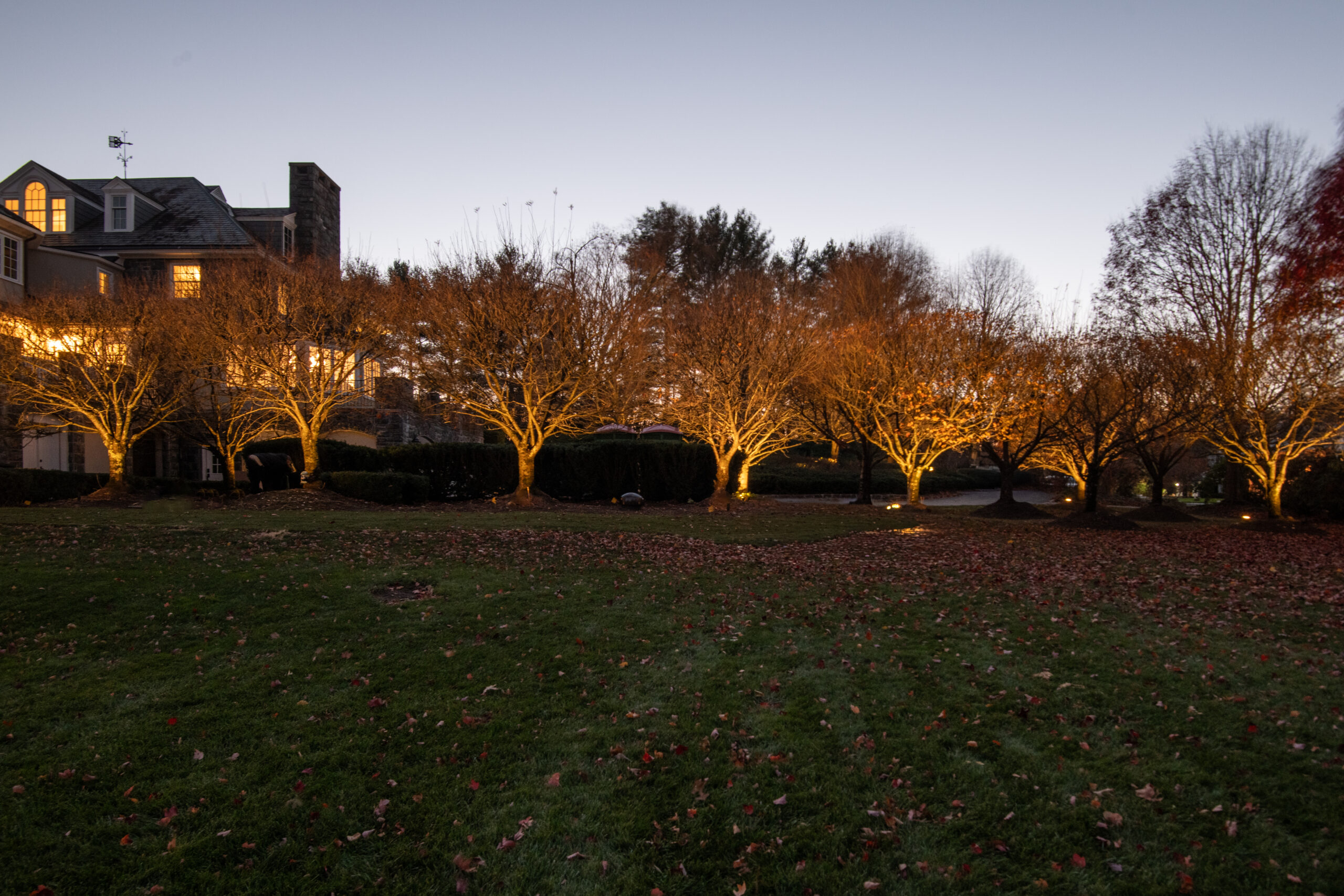
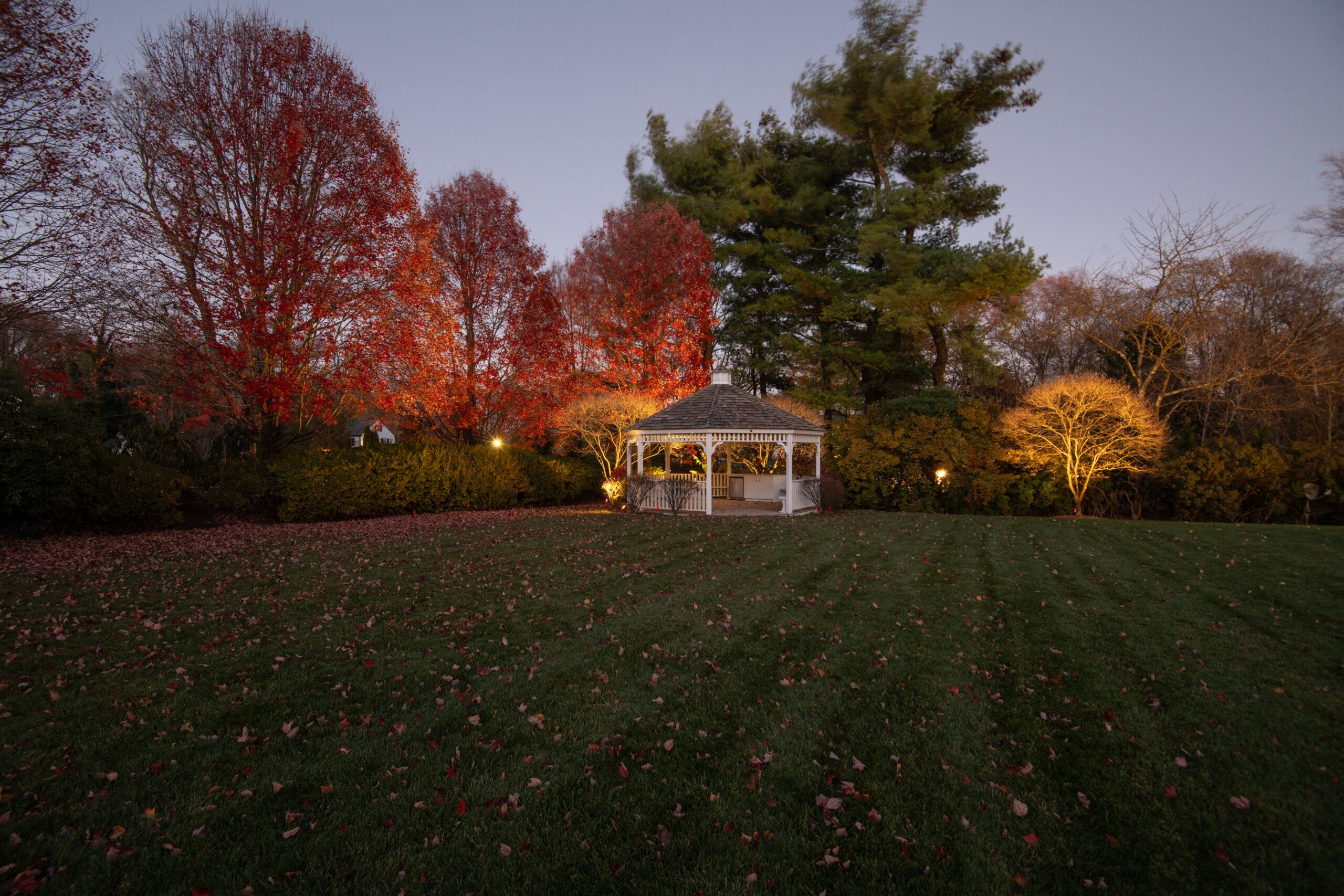
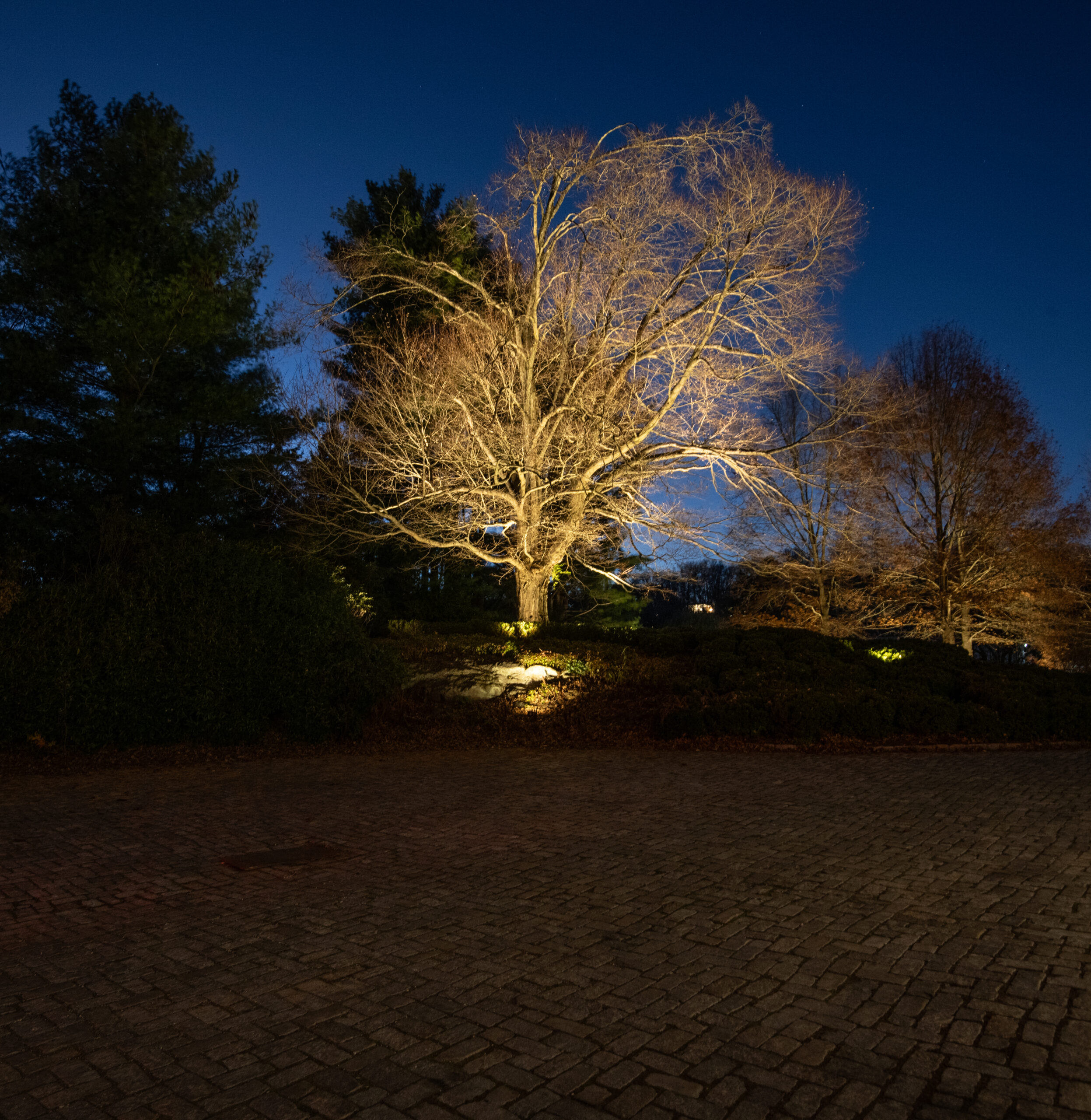
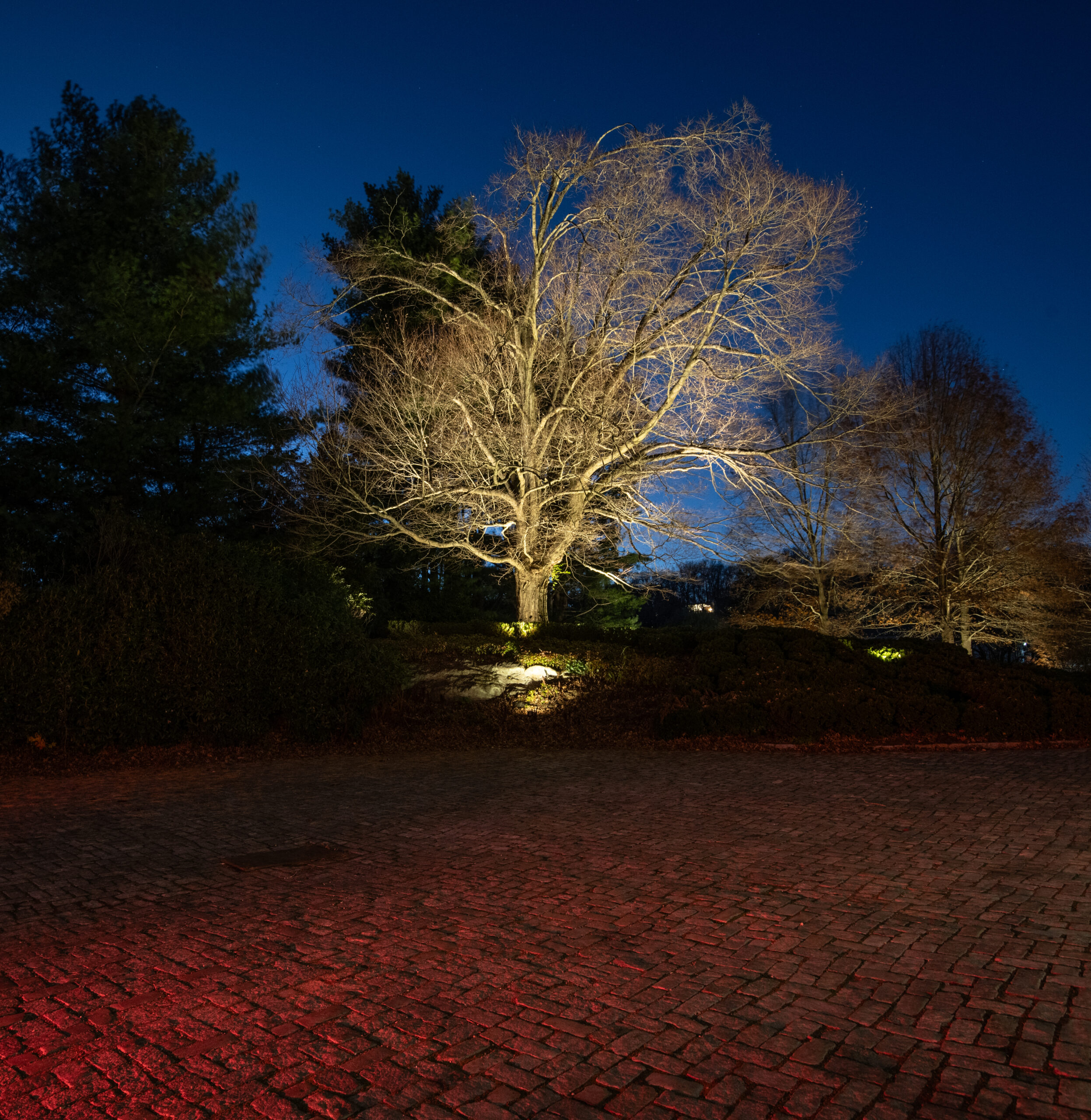
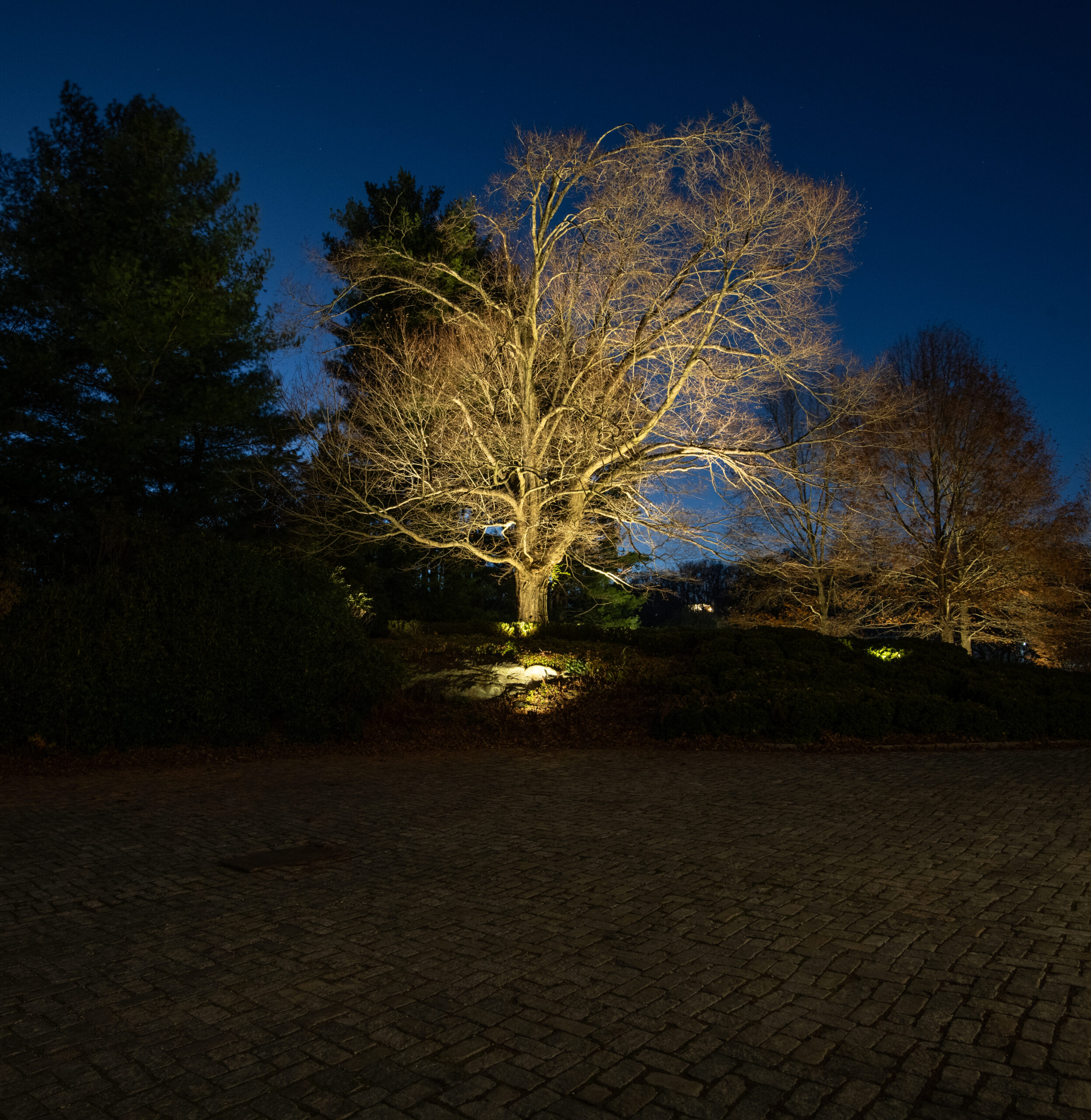
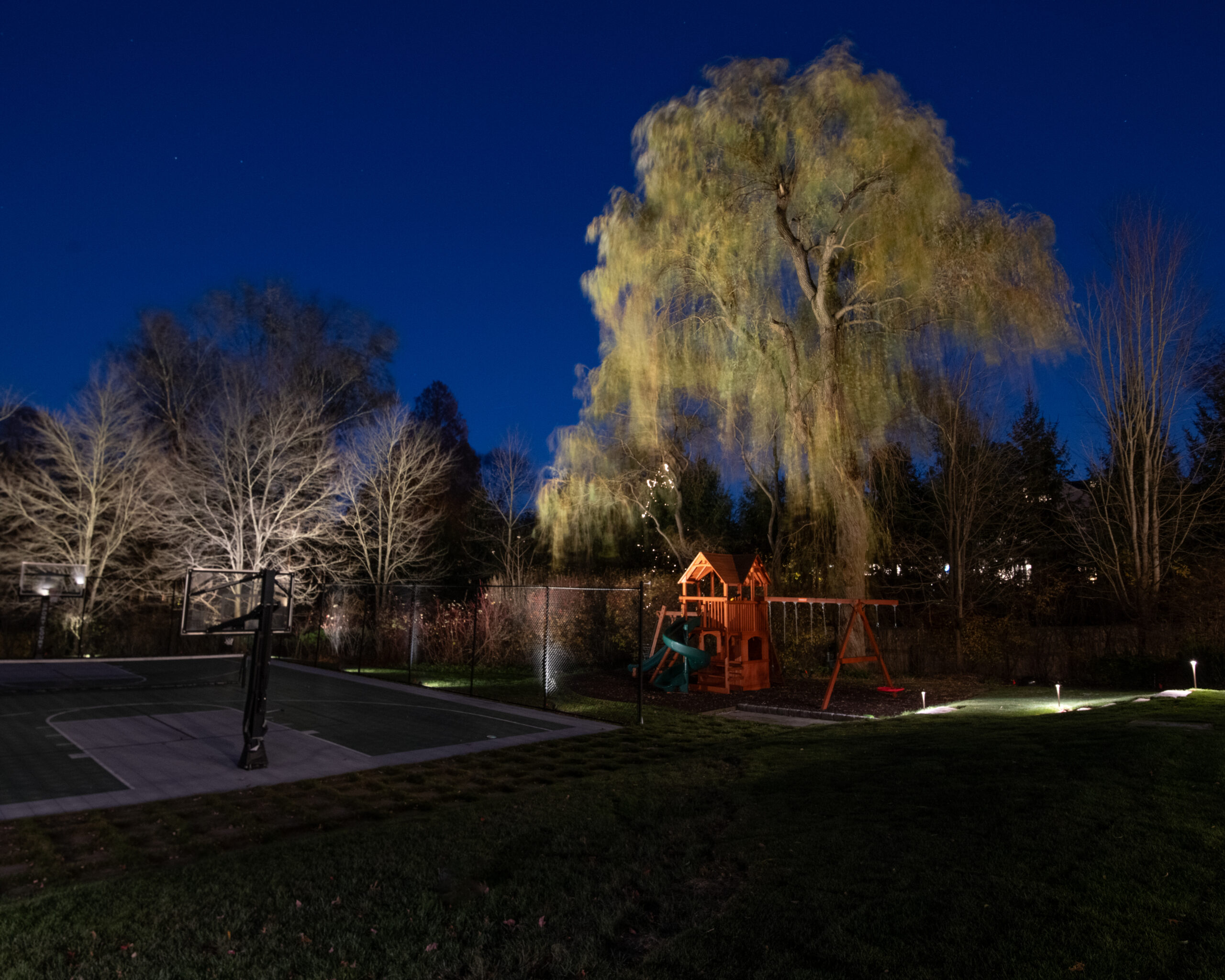
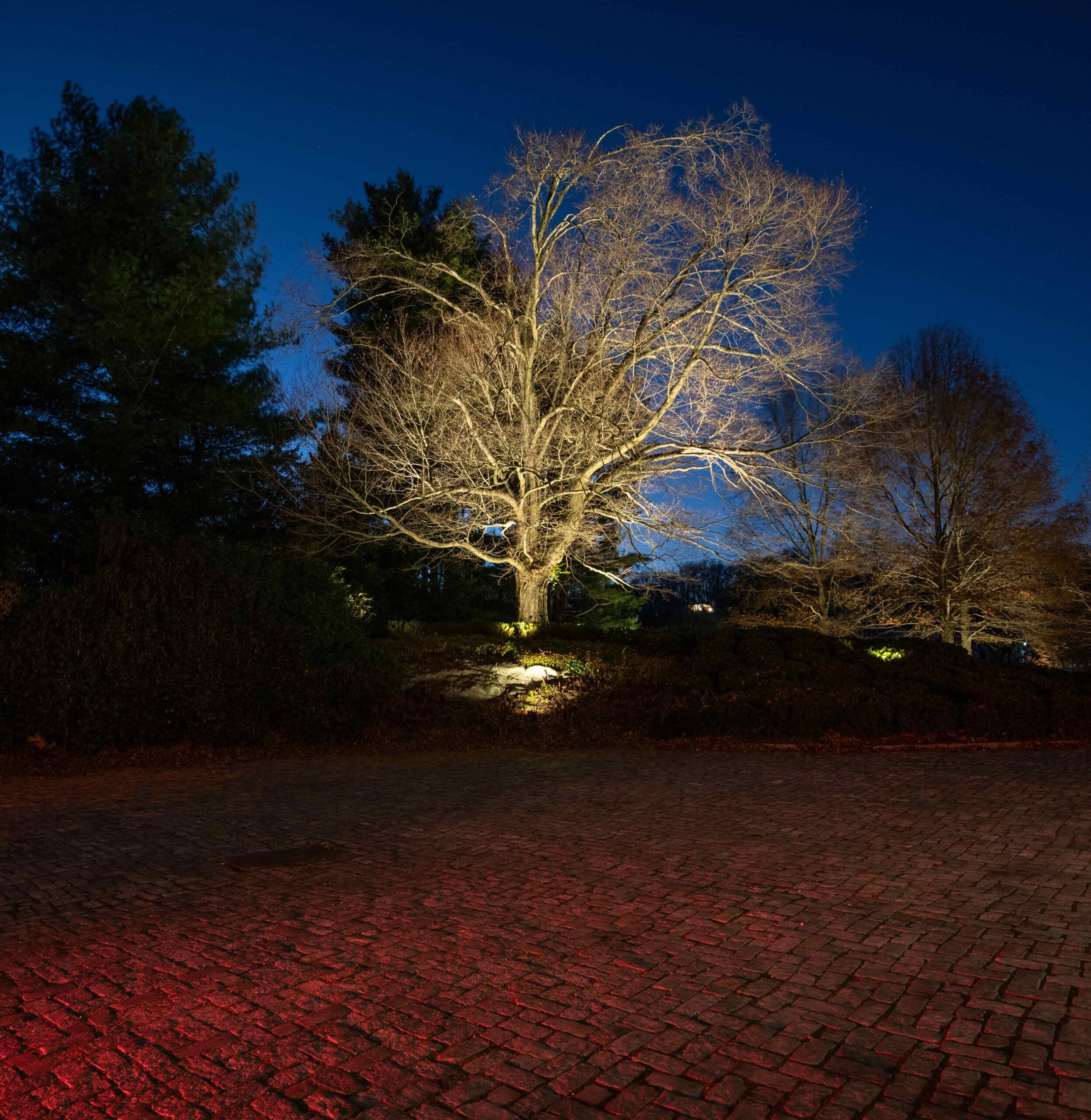
To create a dramatic nighttime scene, it was essential to apply the appropriate lighting techniques to achieve the desired visual effect for this specimen tree. In the Northeast, plant material changes significantly throughout the seasons, and as a lighting designer, understanding those seasonal characteristics is critical. That knowledge allows the tree to maintain its presence and form during both the summer and winter months.
This effect was achieved by installing multiple fixtures beginning at the trunk and extending outward beneath the branches. The light filters through the structure of the tree before finishing by illuminating the full canopy. Each layer of light was carefully considered to preserve the tree’s natural form while enhancing its scale. Because this tree serves as a primary focal point on the property, it was intentionally illuminated at a higher level than its surrounding elements.
Stone Façade of the Home
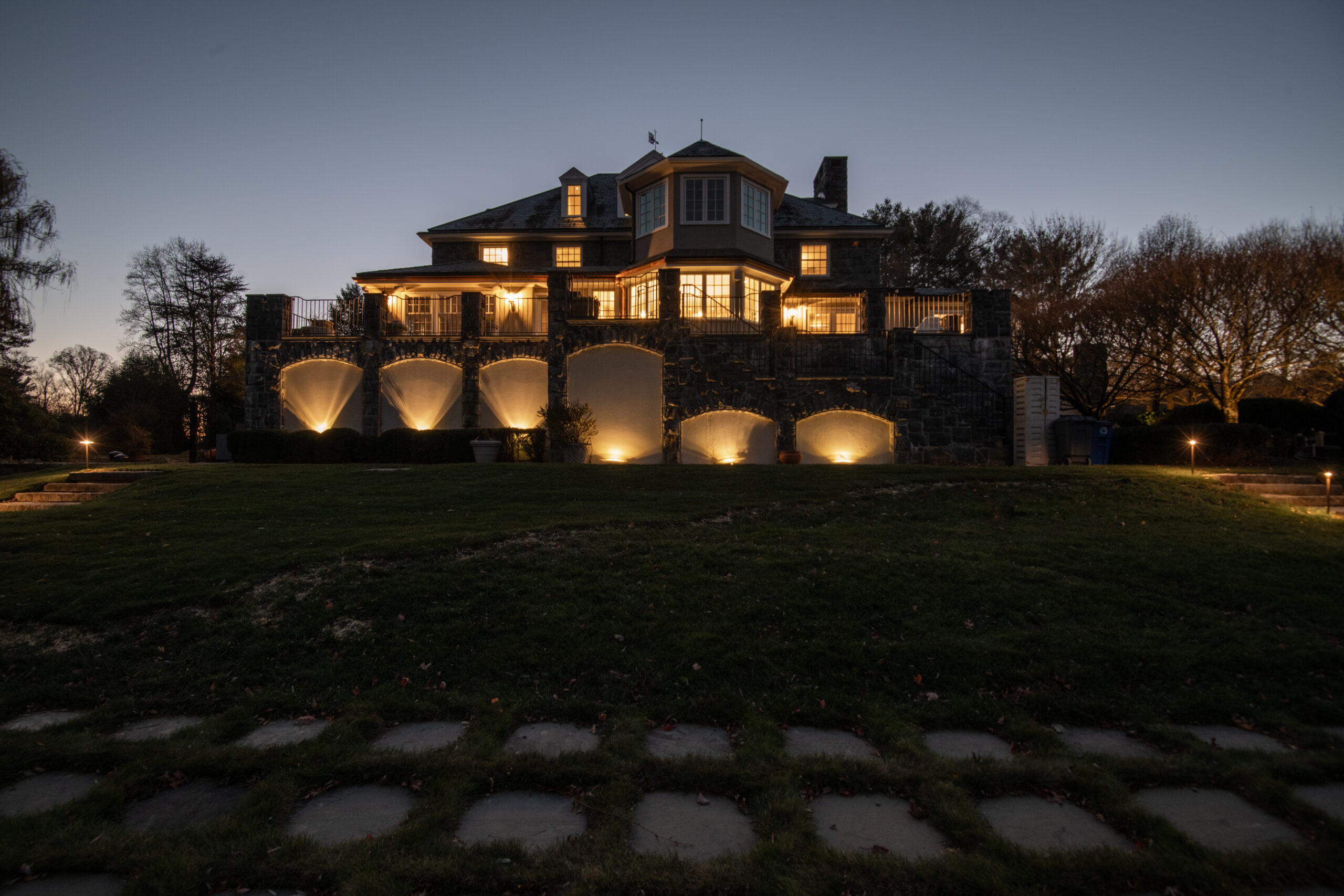
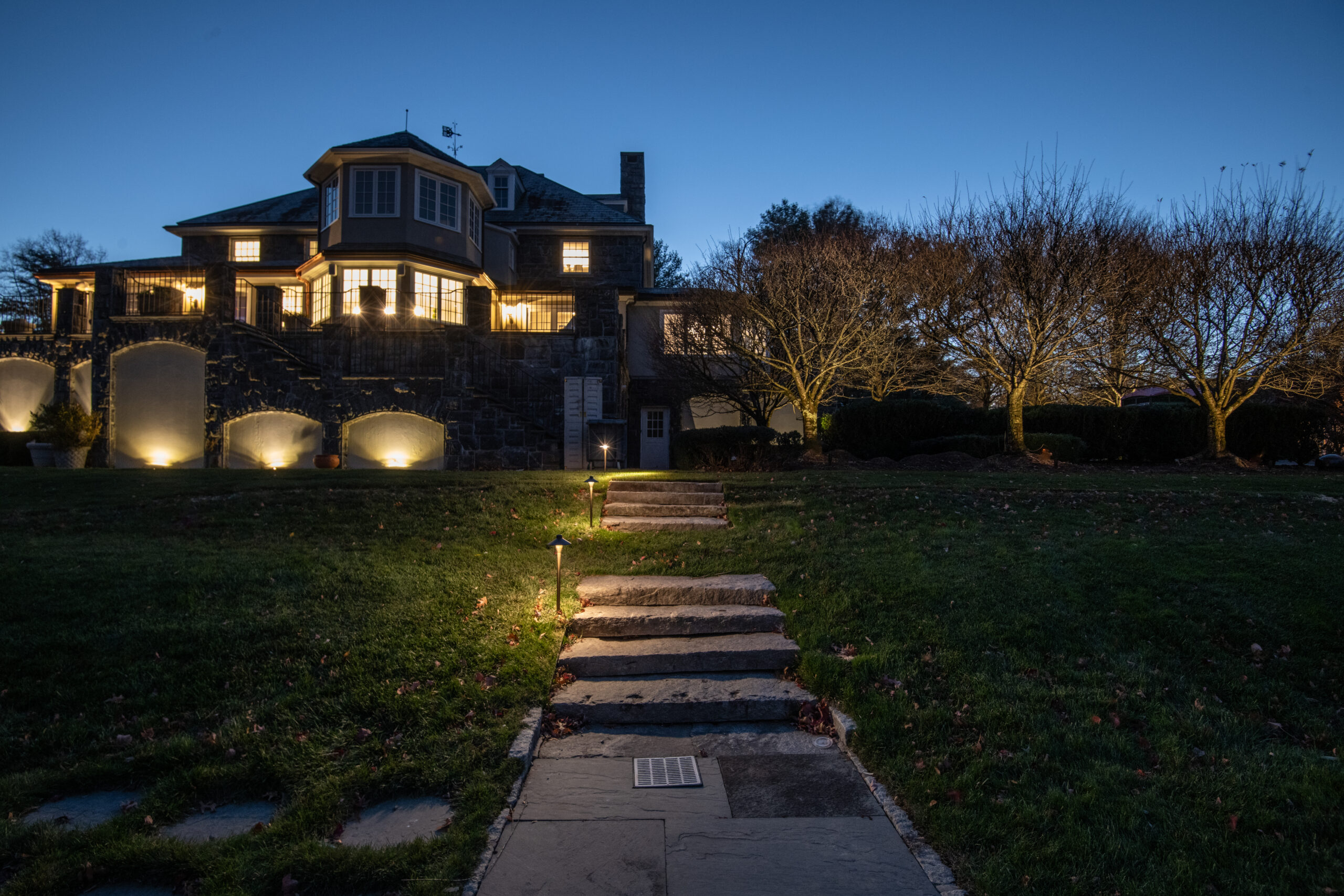
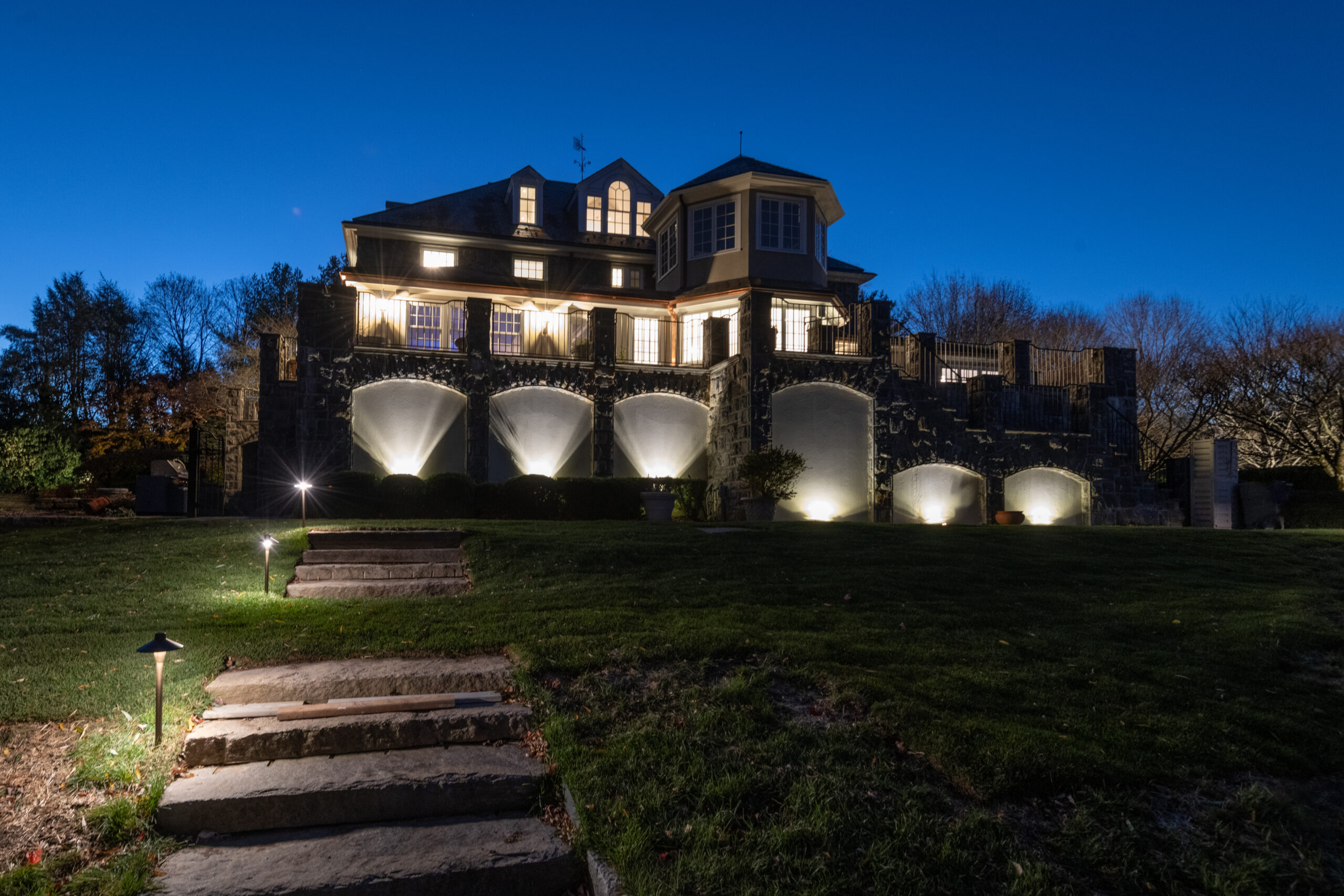
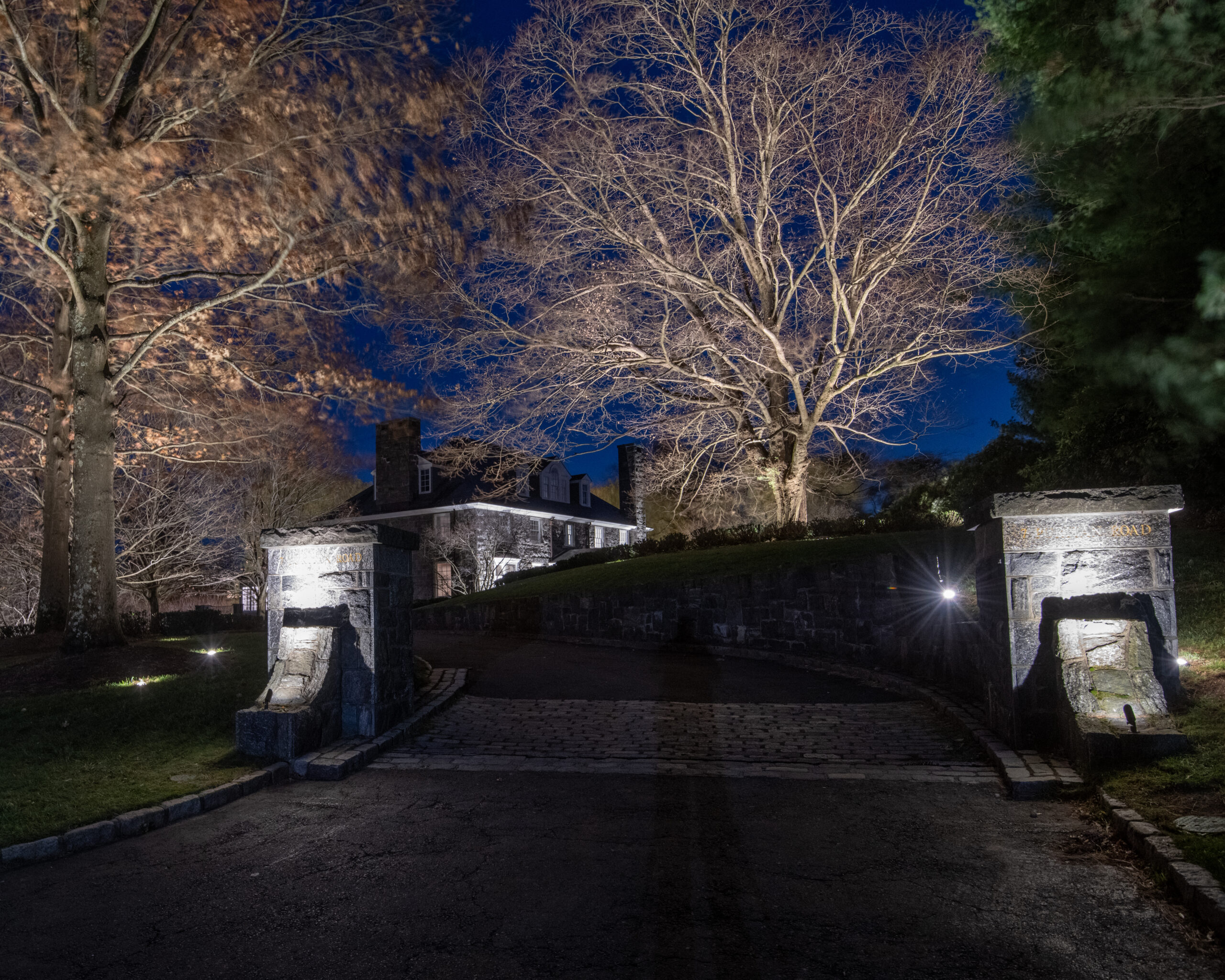
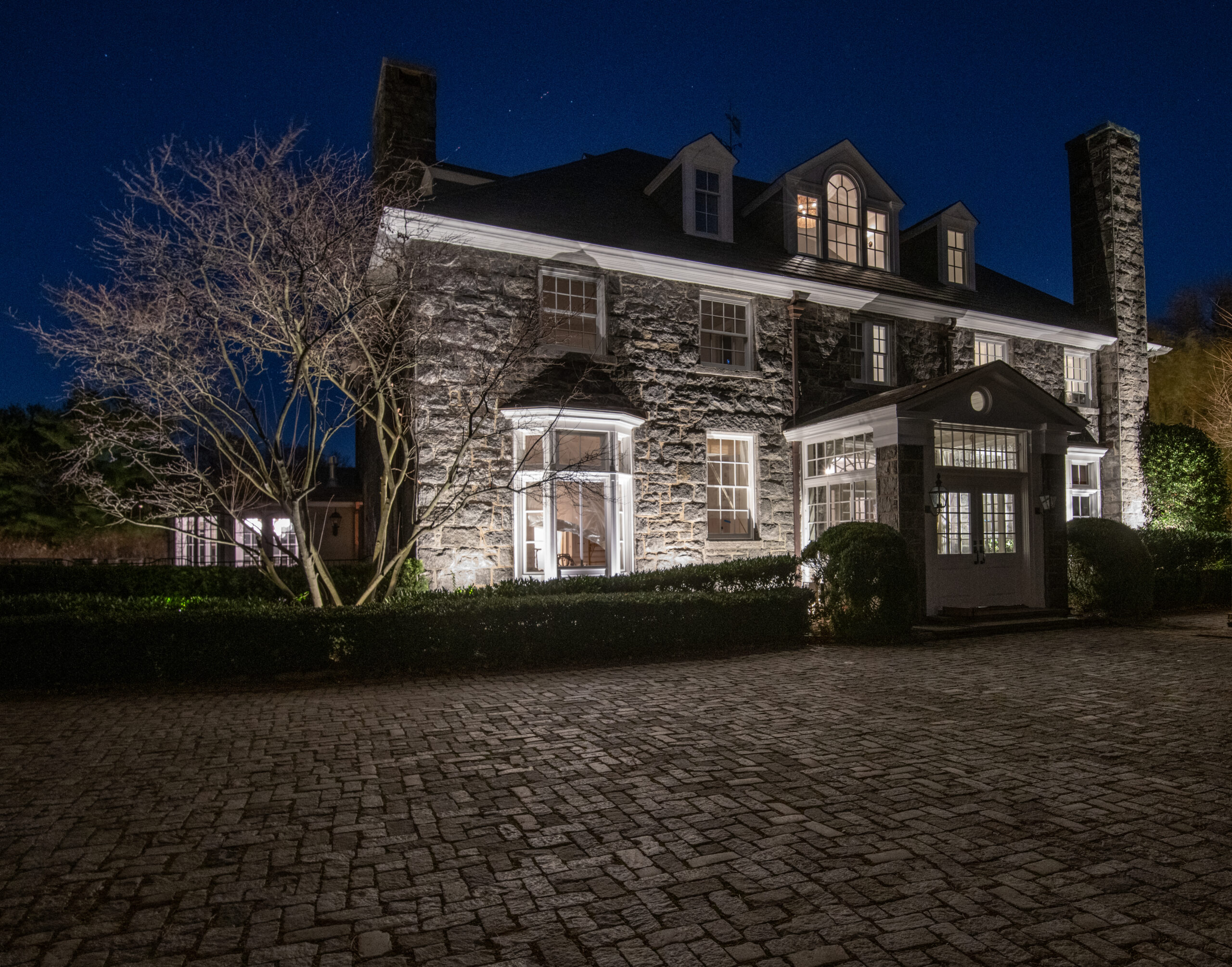
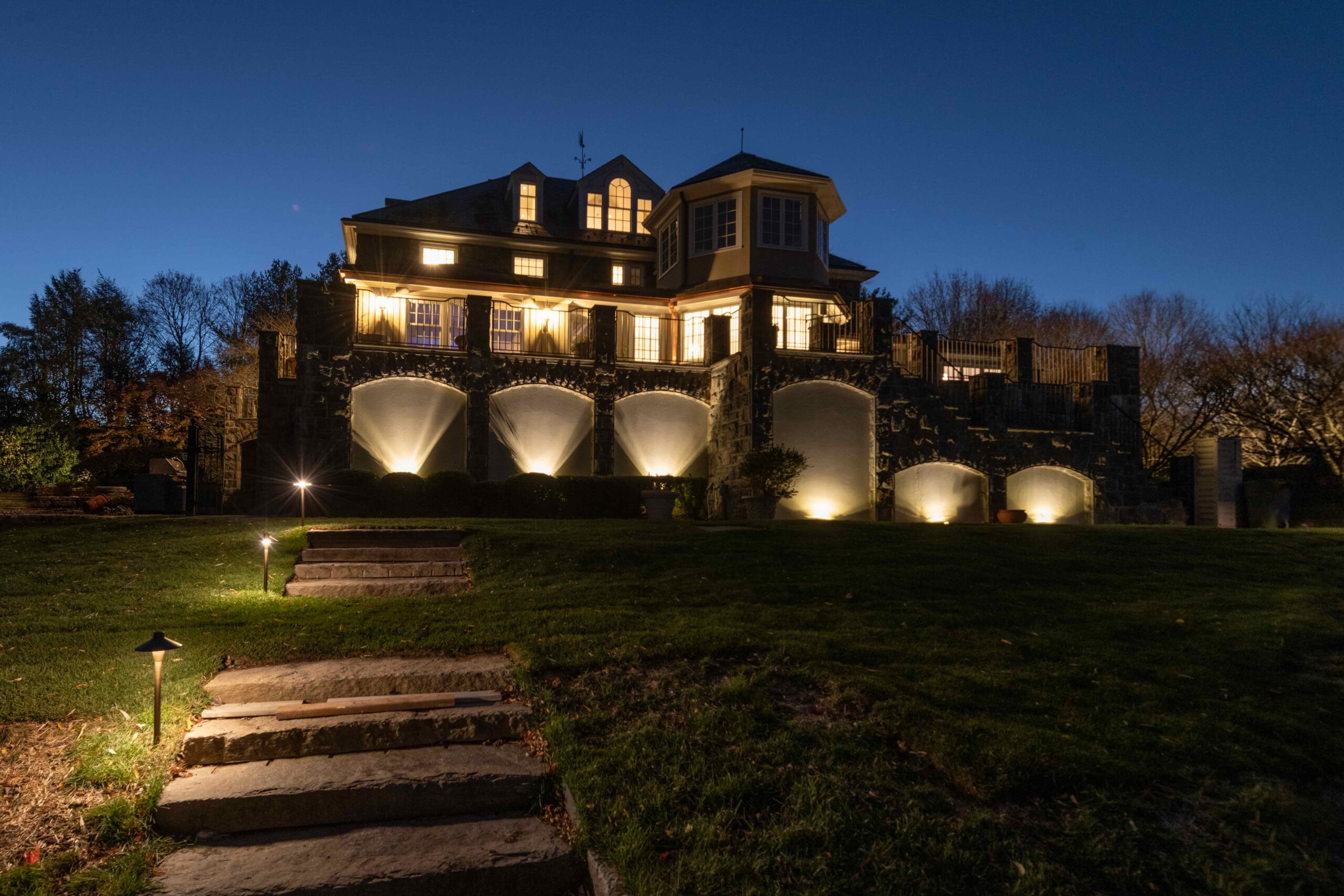
The contrast between rough and smooth stone textures defines the structured shape of this home. By uplighting the stone façade, the lighting reveals the intricate stonework and emphasizes the natural texture pattern throughout the elevation.
This grazing technique also highlights the underside of architectural elements, including the bay window frames, adding depth and dimension to the façade. Façade lighting requires careful planning to avoid glare caused by light reflecting off or penetrating windows. The overall placement of fixtures was designed to create visual cohesion—bringing together the stone architecture and the surrounding plant material into a unified nighttime composition.
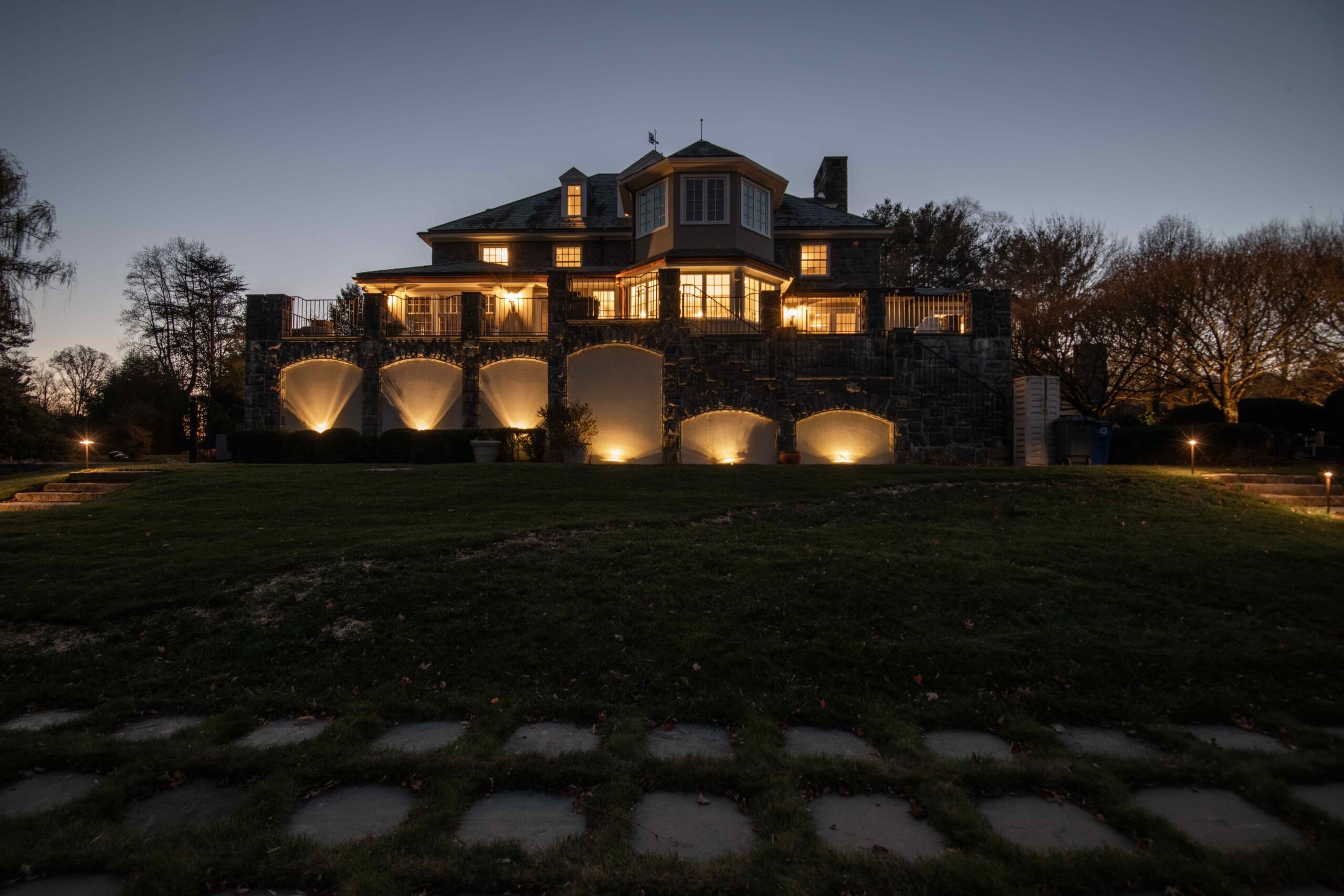
“Seashell Look” View from the Tennis Court
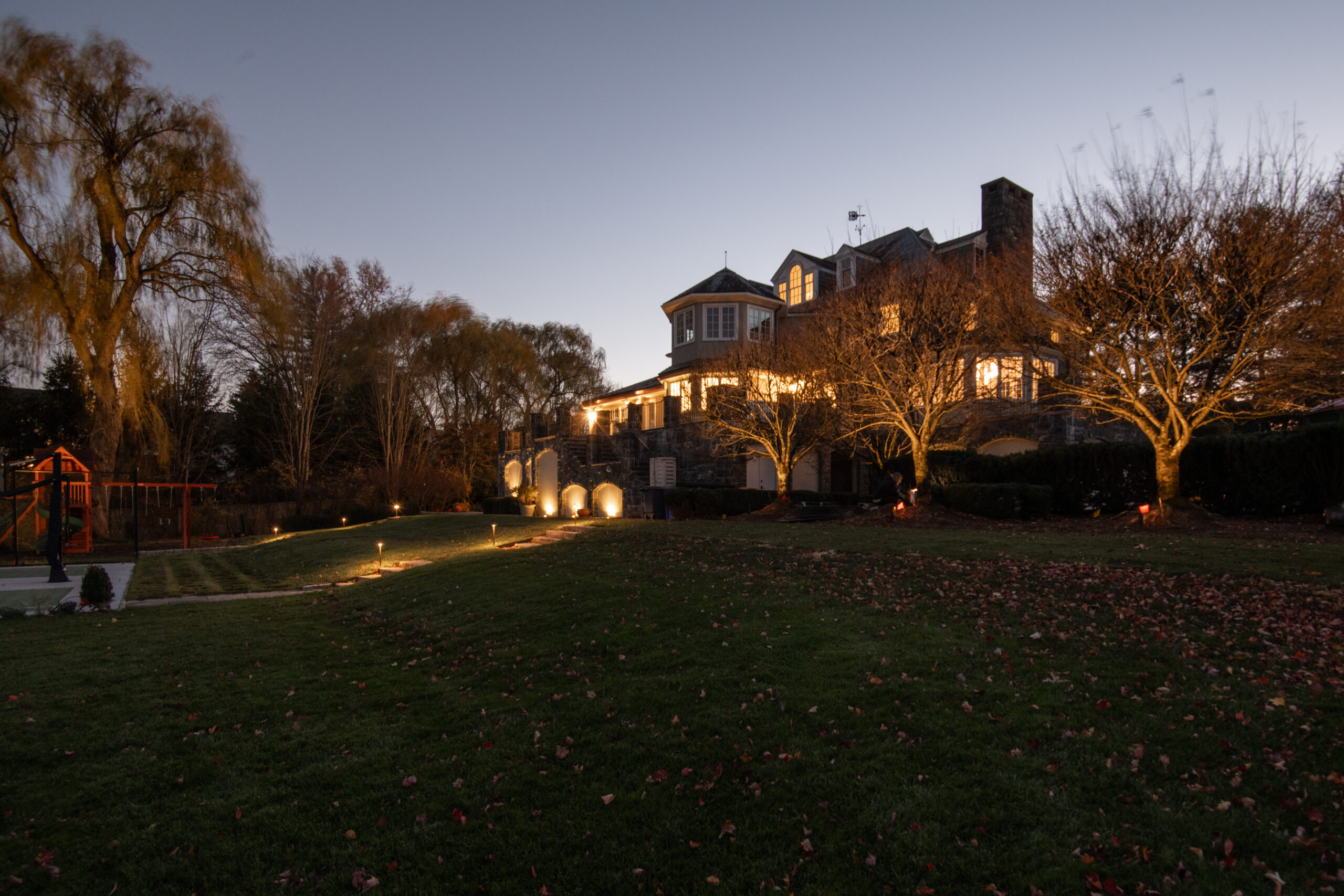
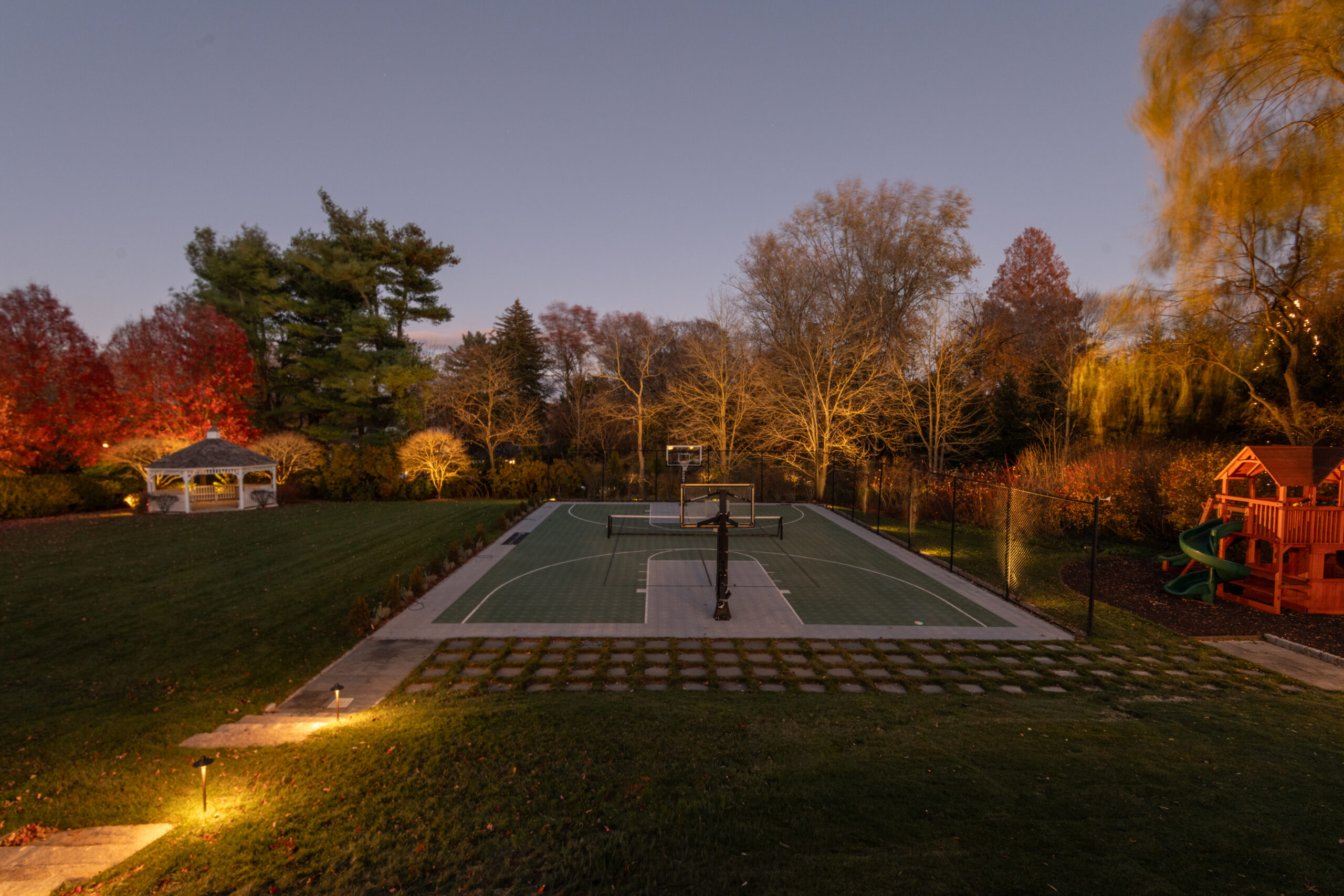
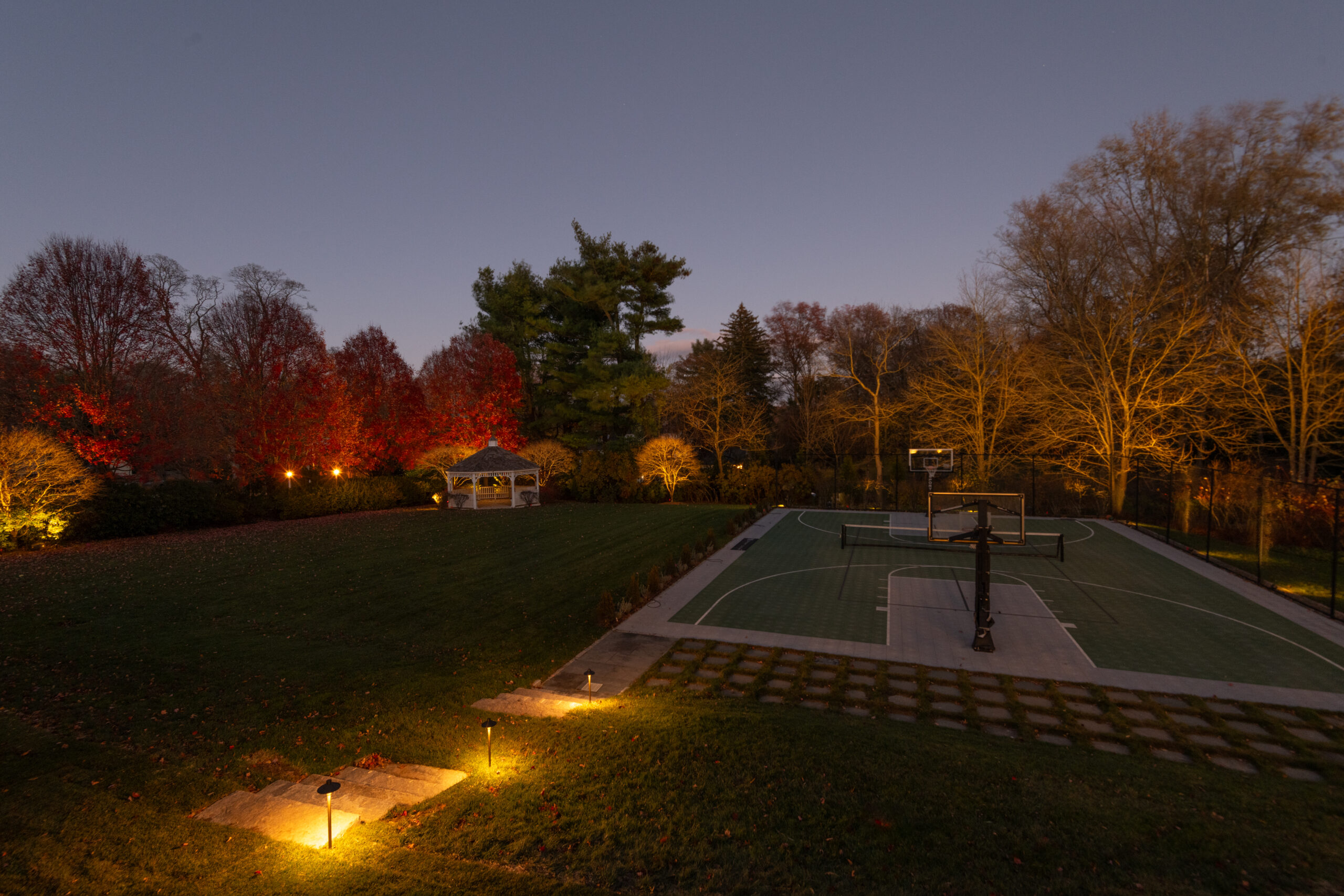
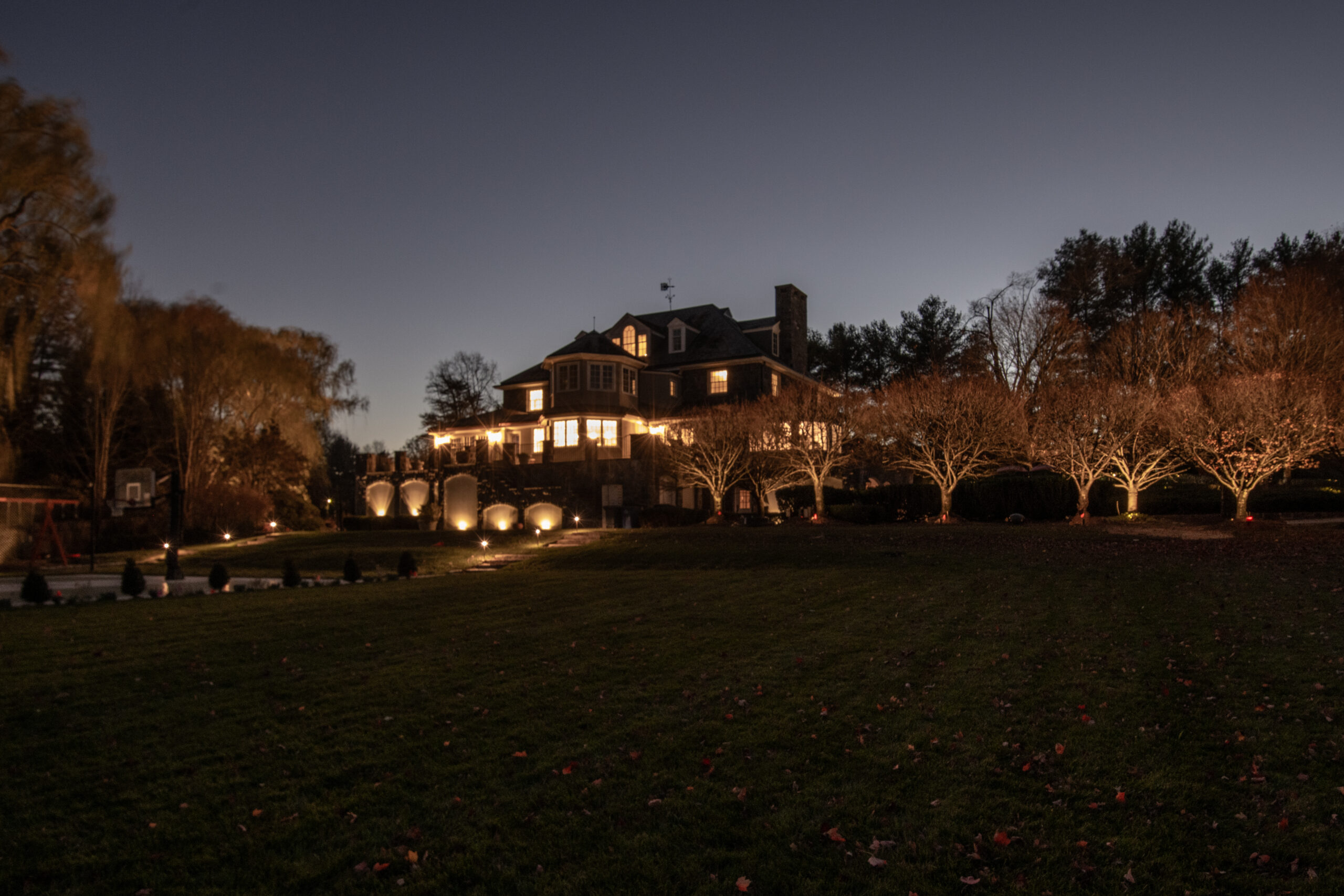
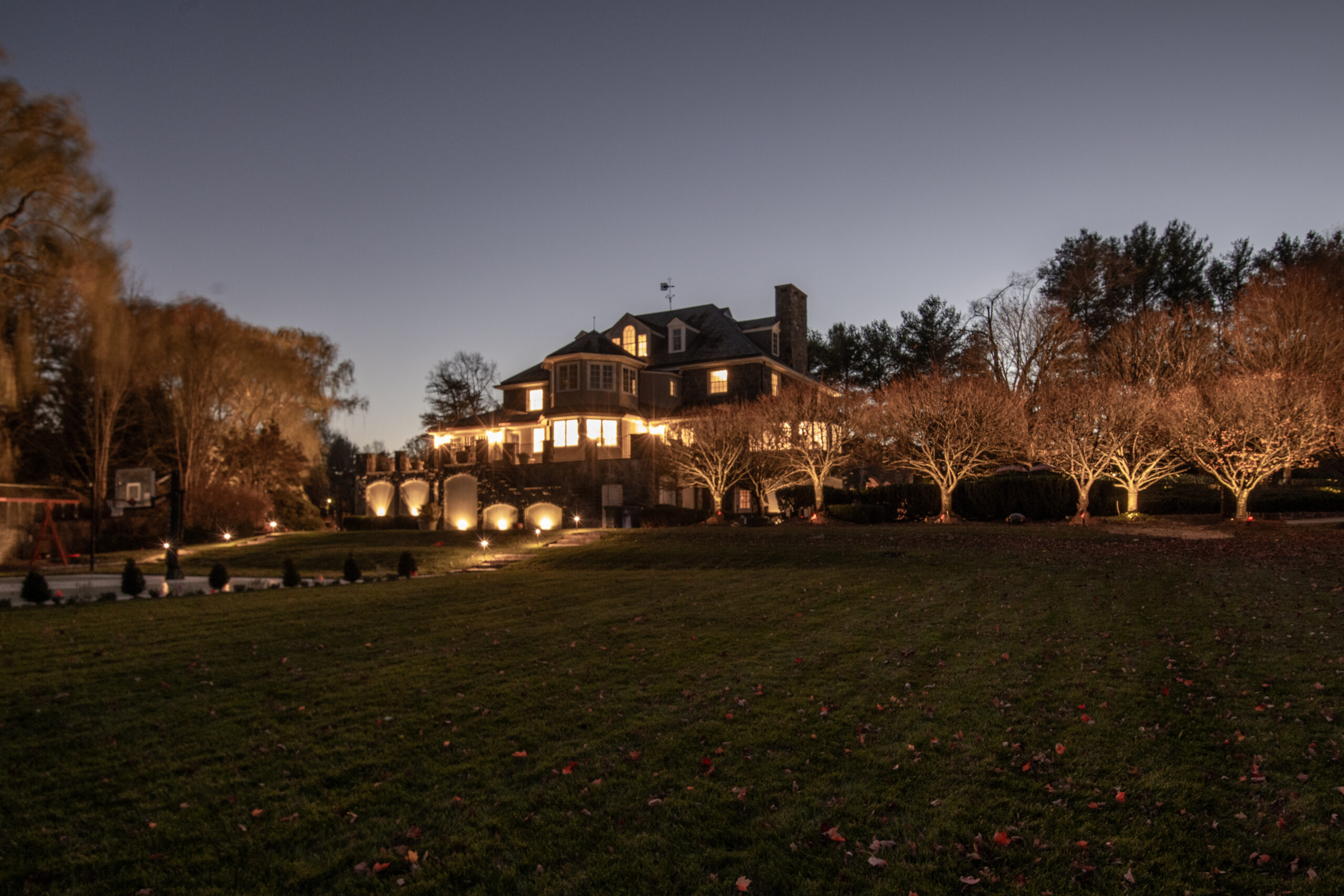
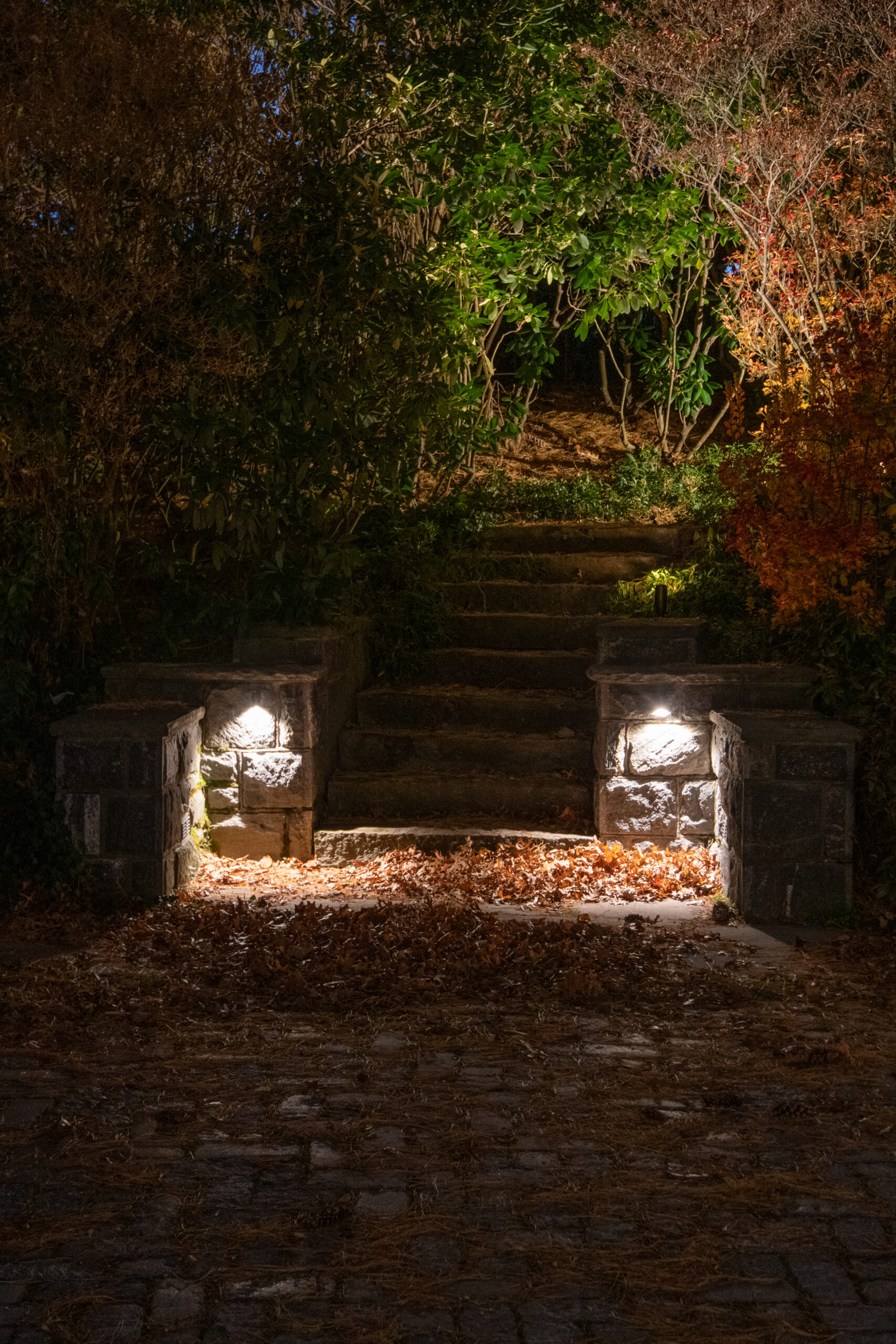
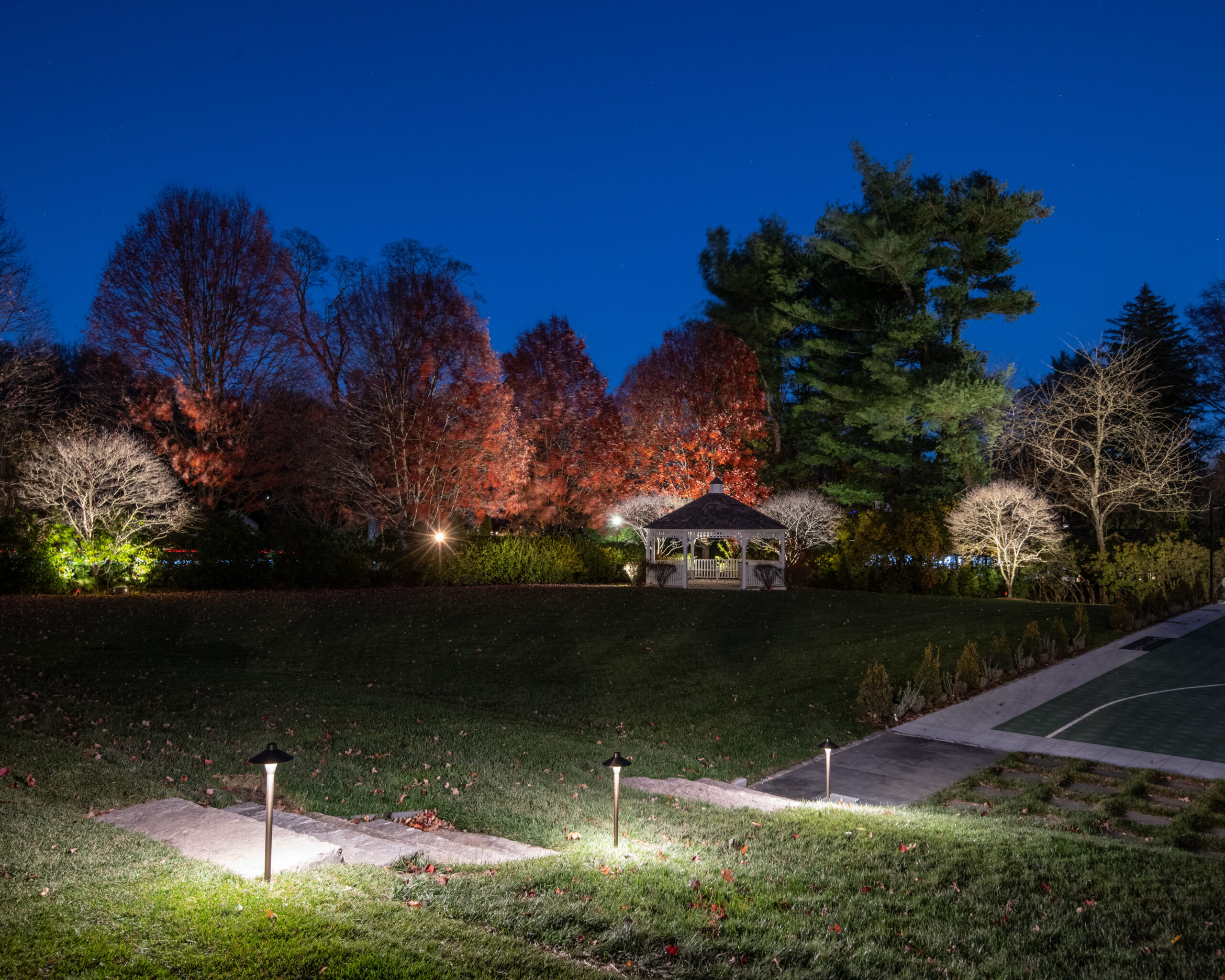
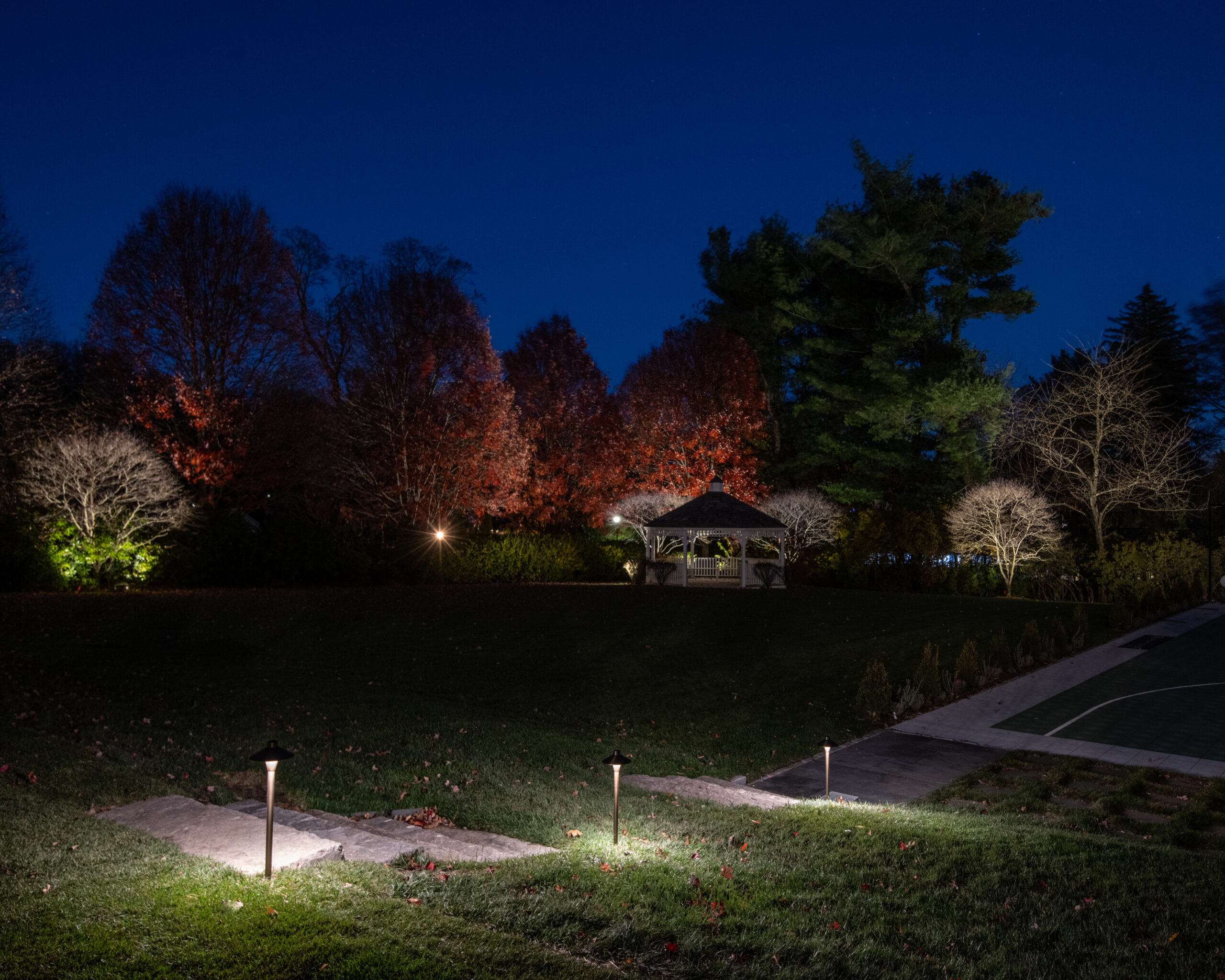
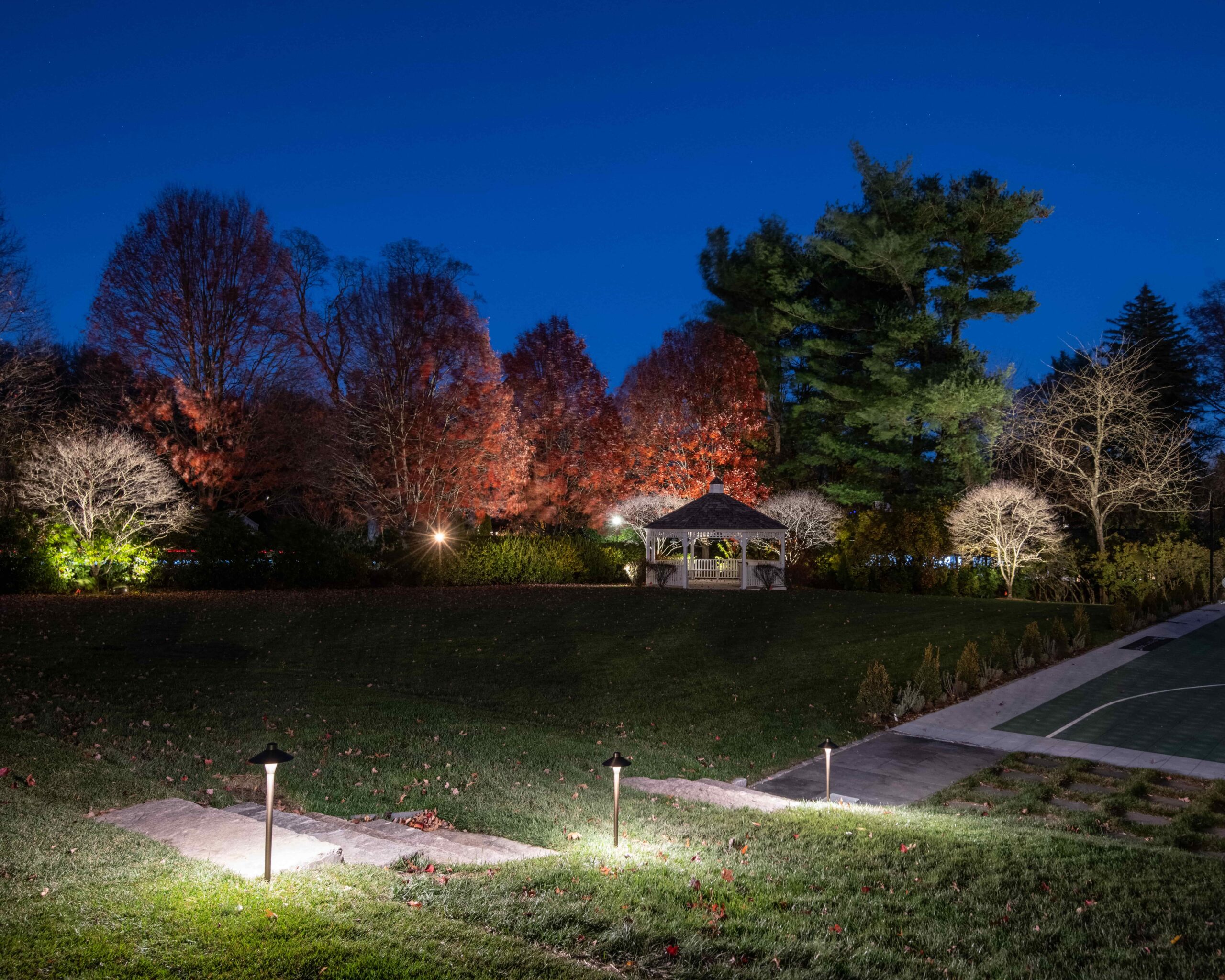
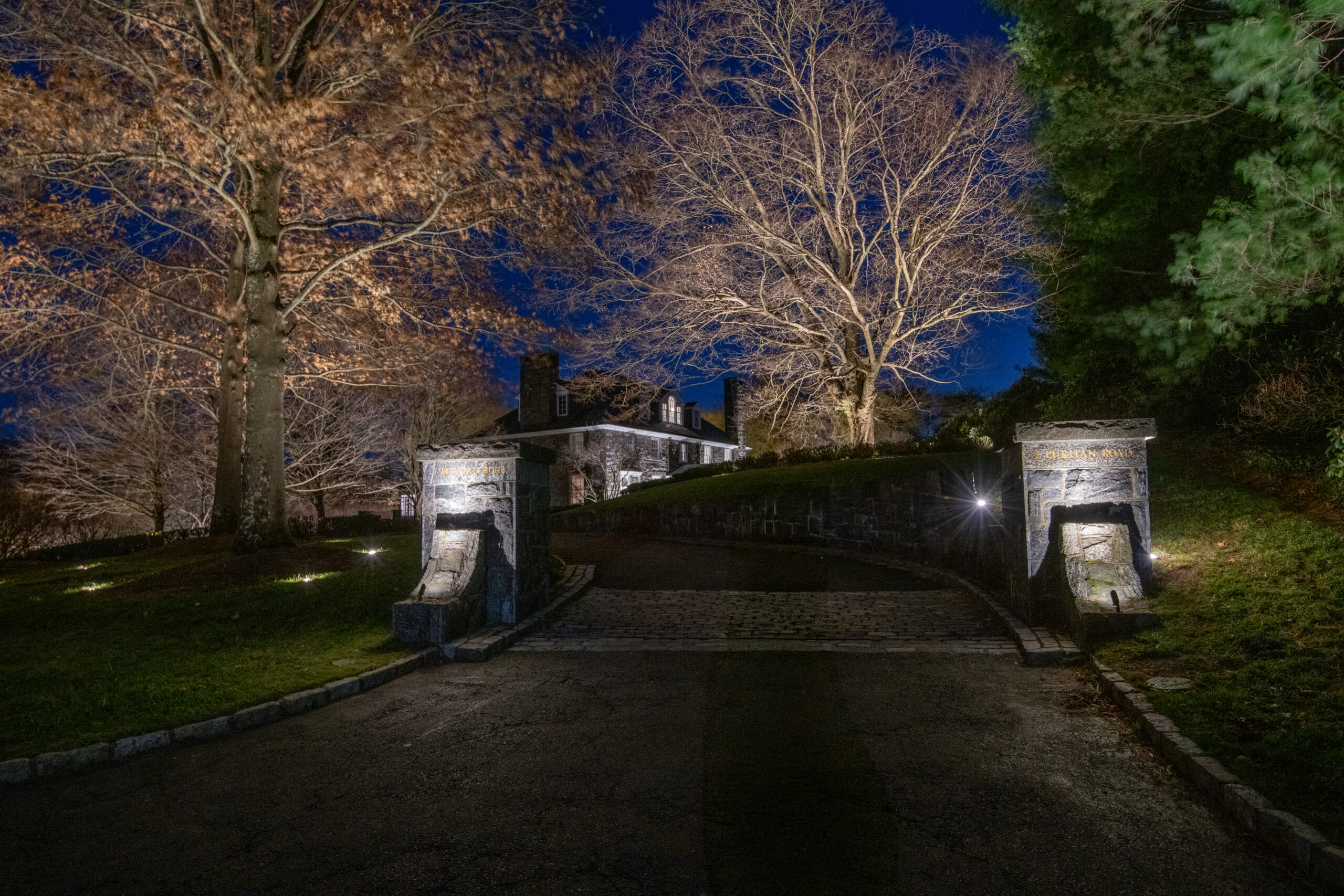
An important part of this design was guiding the client and their guests through the property by lighting elements along their path as they move toward various destinations. Effective pathway lighting requires an understanding of the different types of traffic that occur within a landscape.
Here, the goal was to provide sufficient visibility along the walking surface without drawing attention away from the more visually significant features of the landscape. The stone façade remains intentionally unlit, while the recessed cavity within the stone is illuminated—creating what I refer to as the “seashell look.” Establishing this visual framework was essential to the overall composition.
To complete the lighting scene, depth was introduced in the vertical background. This was achieved by softly uplighting the large trees beyond the path, creating a sense of closure and completing the spatial experience.
All Project Photos